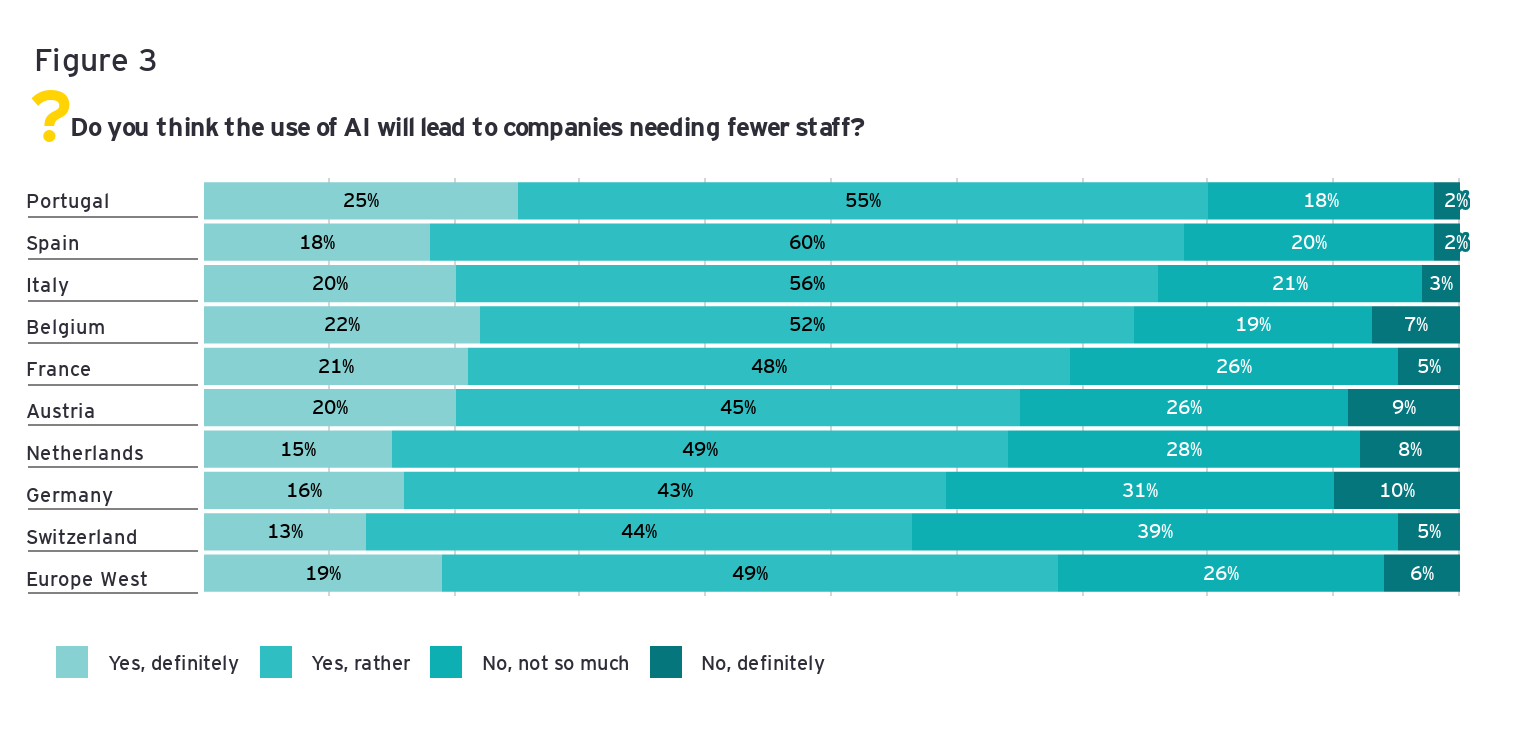
One in three respondents in Italy (34%) expects that the new technology will replace human labor on a large scale. The figure is similarly high in Portugal (31%). In contrast, the proportion is significantly lower among respondents in Germany (14%), Switzerland (16%), and Austria (17%).
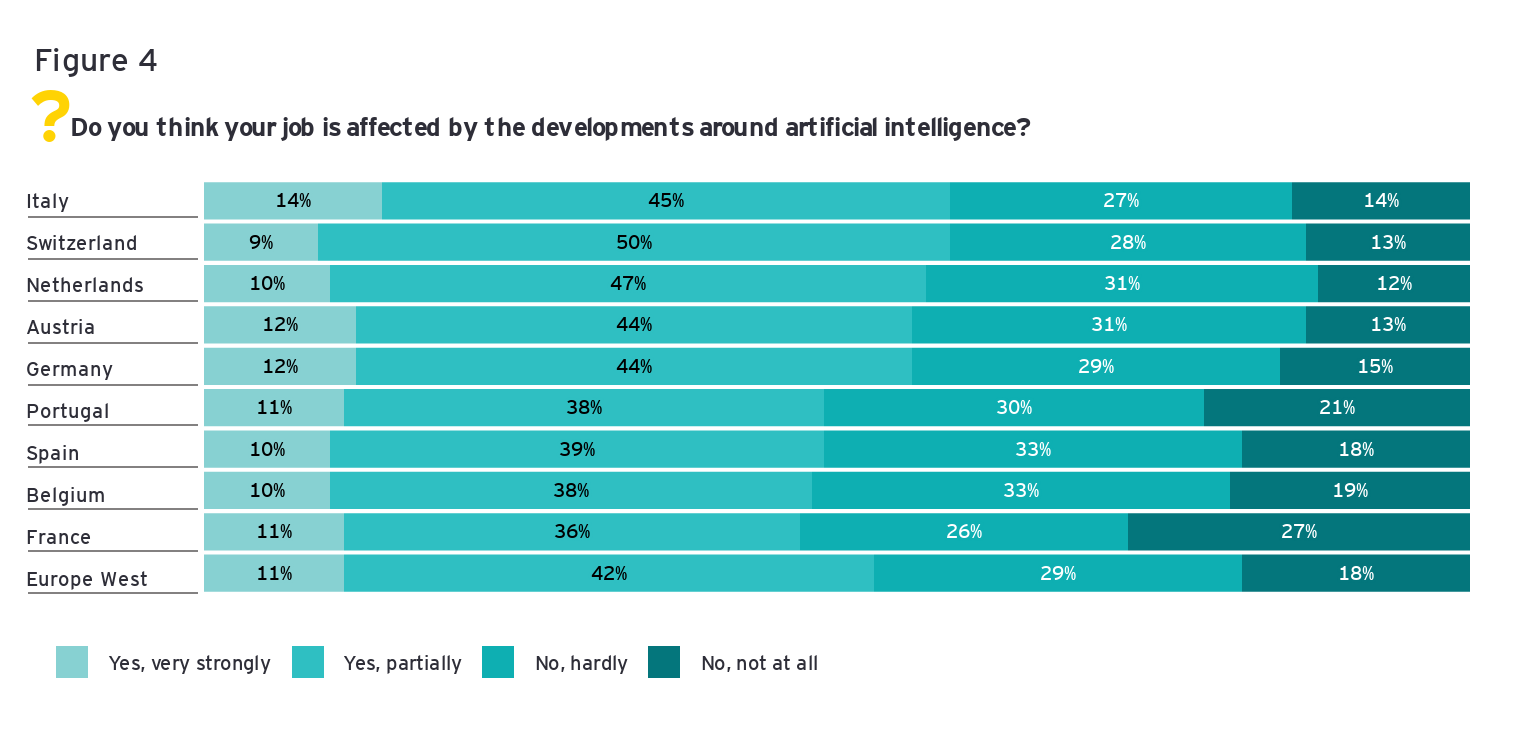
Figure 4 shows the general consensus among respondents across the nine analyzed European countries, with more than one in two (53%) stating that AI applications will influence their work – or are already doing so. In Italy and Switzerland (59% each), the figure is almost six out of ten. The proportion is also above average in the Netherlands (57%), and Austria and Germany (56%). On the other hand, it is below average in France (47%), Belgium (48%), as well as in Spain and Portugal (both 49%).
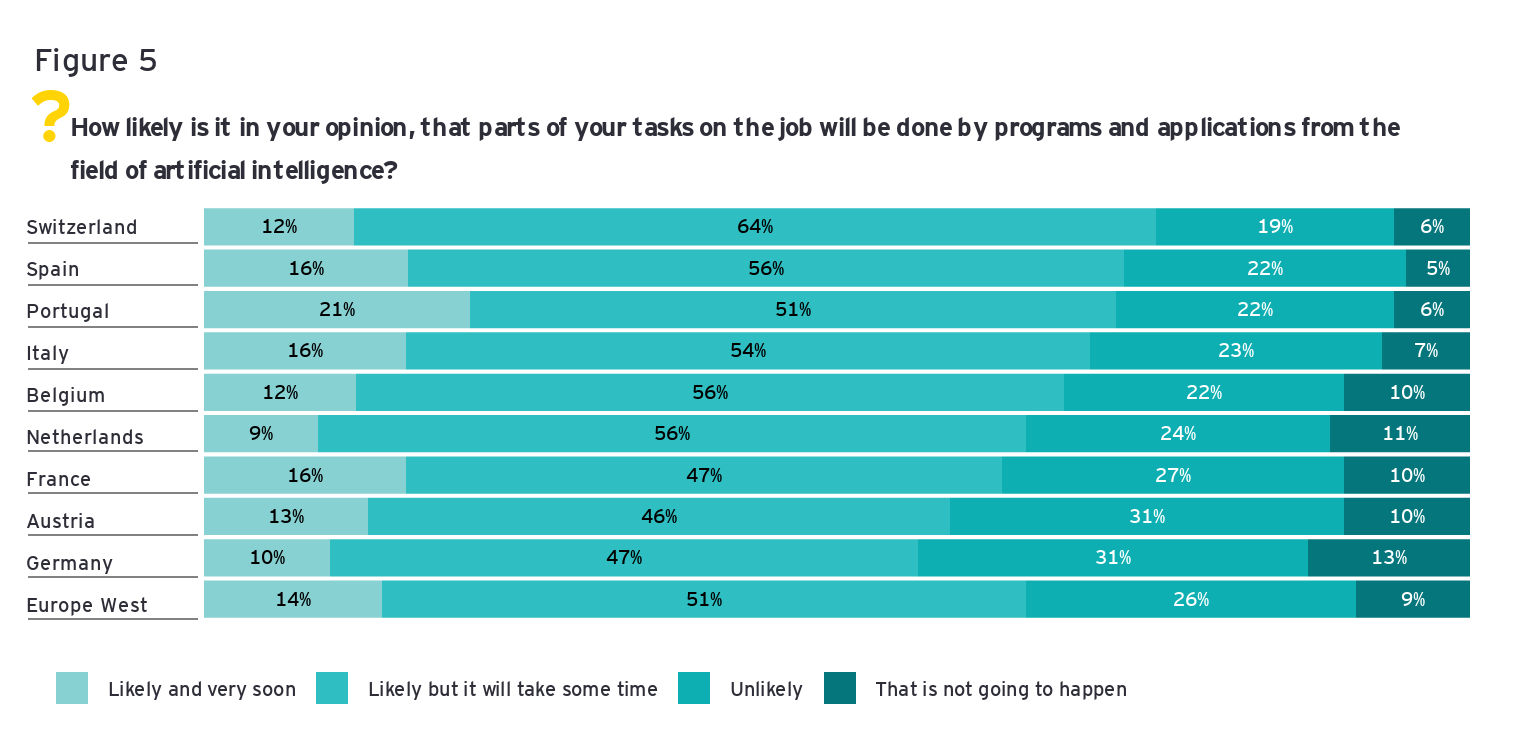
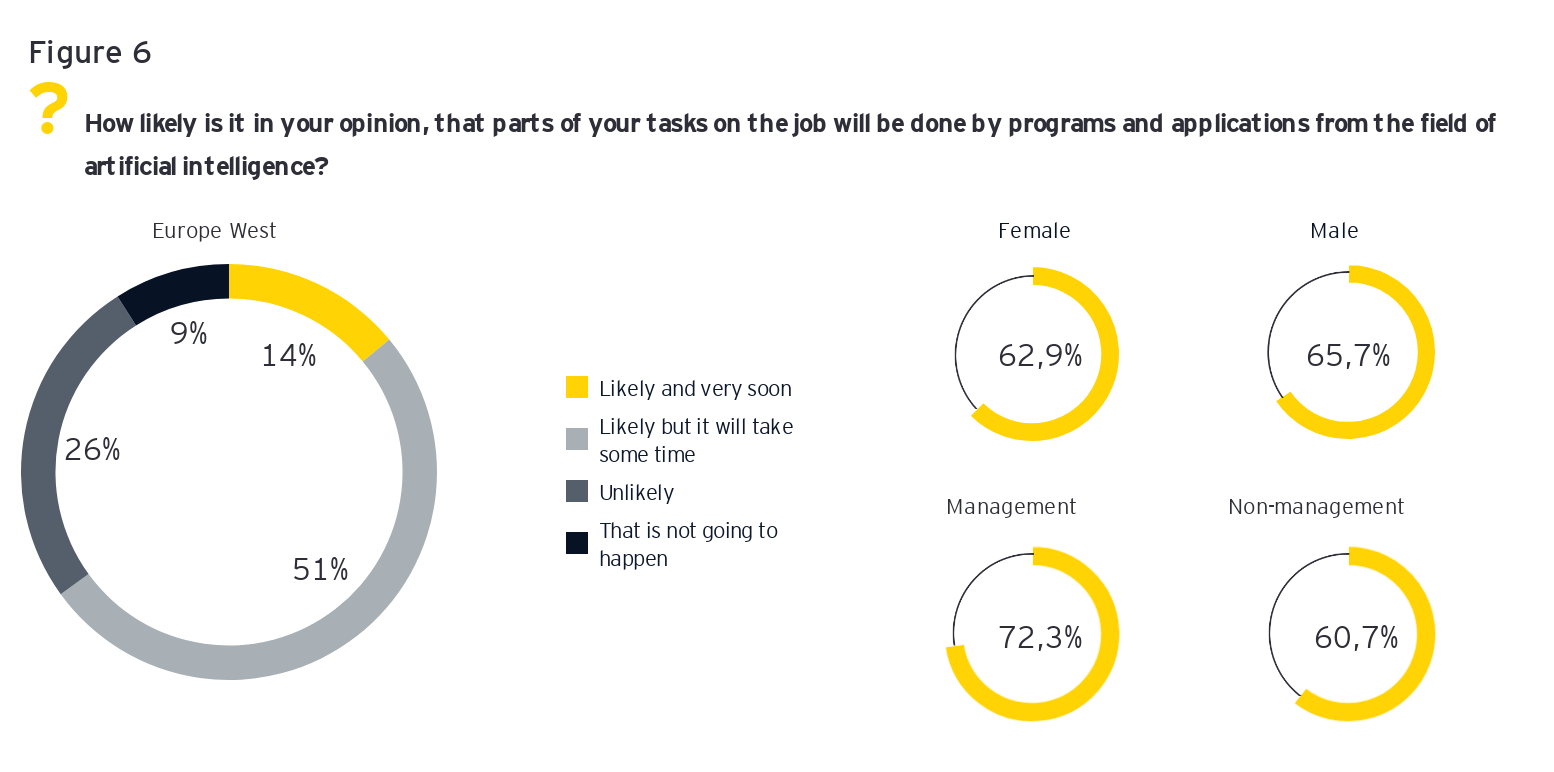
As discussed in the previous section, most respondents expect artificial intelligence to take over elements of their work and redefine their job profiles. Analyzed by country, more than three out of four respondents in Switzerland (76%) assume that artificial intelligence will take over some of their tasks. This if followed by Spain and Portugal (72% each), Italy (70%), and Belgium (68%), where employees are likewise sure that – sooner or later – some of their tasks will be taken over by applications from the field of AI. The average among all respondents is 65%. In Germany (57%) and Austria (59%), the figure is below average.