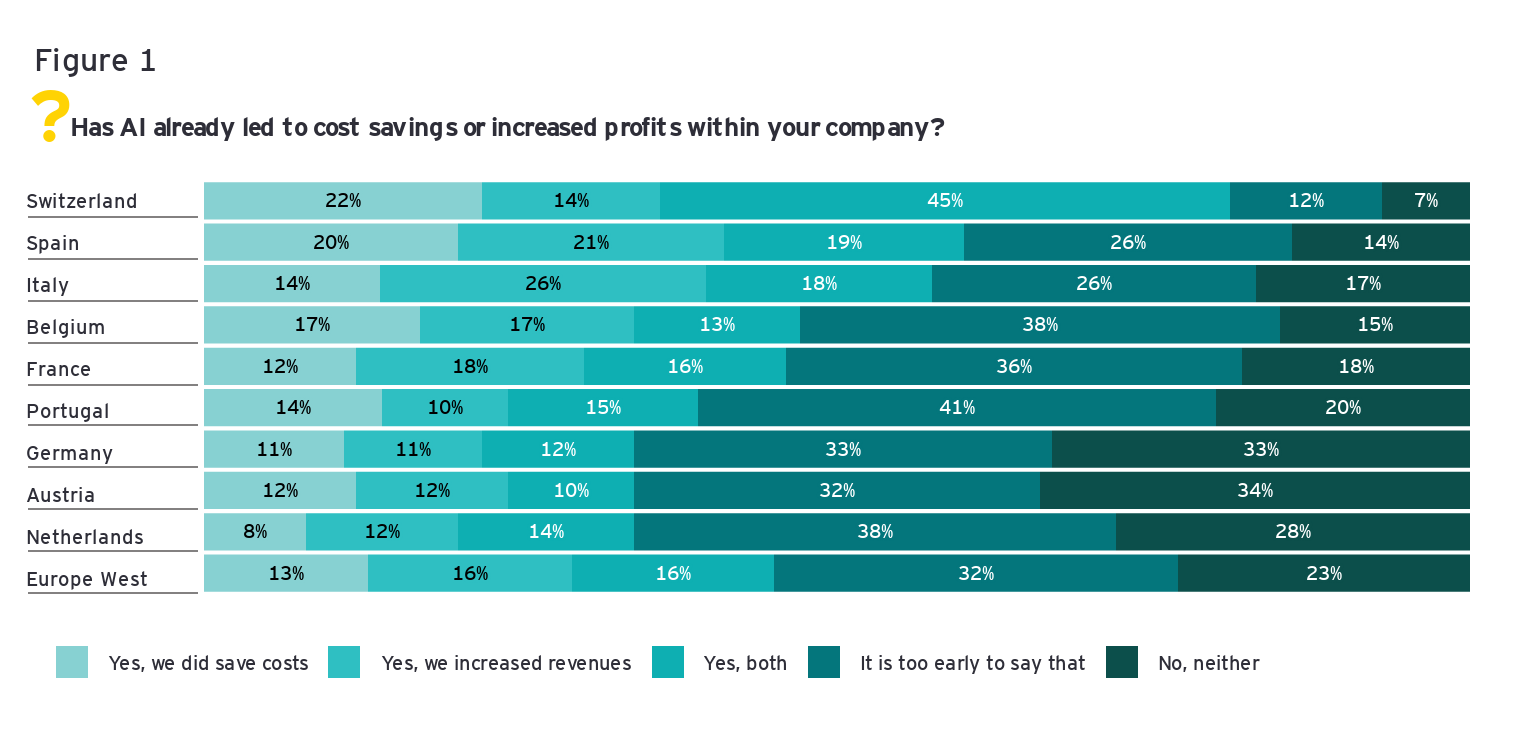
By function, the use cases in which AI has been operationalized vary widely, from streamlining supply chain operations to optimizing marketing strategies and enhancing customer experiences. At present, organizations are seeing the greatest benefits in IT (35%), followed closely by marketing (30%) and cybersecurity (27%). Interestingly, legal and compliance departments see little scope for AI implementation at present (see figure 2). That said, with little more than initial inroads made so far in AI implementation and operationalization, most eyes are still fixed on future iterations of the technology.
Aside from cost and efficiency improvements, embracing AI allows businesses to automate repetitive tasks, freeing up employees to focus on more strategic and creative endeavors. Indeed, most respondents expect artificial intelligence to take over parts of their work (65%), with some anticipating that they’ll be handing over some of their workload to AI in the very near future (14%). If they get it right, organizations have a tremendous opportunity to leverage AI to enhance job descriptions. A shift toward more intellectually stimulating work profiles would not only improve employee satisfaction but also enhance employer branding, attracting top talent in a fiercely competitive labor market. That said, all stakeholders need to address legitimate concerns about job displacement, an issue we investigate in the following section.